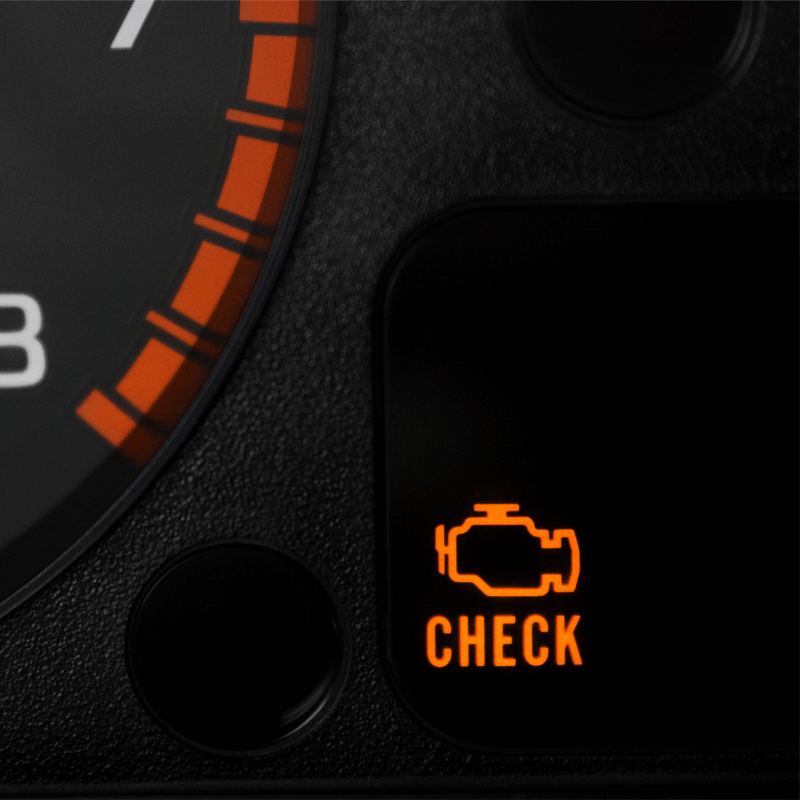
In the majority of cases, when something’s not right in one or more of the vehicle’s parts or systems, the Check Engine light will be illuminated.
Although some of these concerns may be minor, like a loose gas cap, other problems can cause major damage to the engine if they’re not taken care of in time. For example, a malfunctioning oxygen sensor can lead to the engine running too rich or too lean, resulting in misfires and decreased fuel efficiency. Plus, if there’s a crack in the exhaust system, carbon monoxide can get into the cabin, which can be hazardous to health.
Is the light blinking?
Many cars have two types of check engine lights—solid and blinking. If it’s blinking, it suggests a more serious issue, like the engine overheating or misfiring, which could cause irreversible damage. If the check engine light is flashing, you should stop driving right away, turn off the vehicle, and request help.
It is important to get the Check Engine light checked out as soon as it comes on. A mechanic can use an OBD scanner to determine what is causing the issue and provide solutions for fixing it. Or, if you have a telematics scanner from carkeepers.club installed in your car – a supervisor can read data remotely and determine what is going on. If you do have to drive with the Check Engine light on, it is best to drive slowly and cautiously.